Standout Books on Software Studies and Sociocultural Contexts of Systems




Abbate, Janet. Recoding Gender: Women's Changing Participation in Computing (MIT Press, 2012).
A prize-winning book and highly compelling work of scholarship that breaks important ground in examining women computing pioneers, and gender in computer science in the academy and in industry. It is a fundamental and richly needed and insightful overview of gender in the history of computing and software studies. Highly recommended and a great work in a critical area.
Abbate, Janet and Stephanie Dick, eds. Abstractions and Embodiments: New Histories of Computing and Society (Johns Hopkins University Press, 2022).
This is a wonderful and insightful edited volume. The two editors of this volume, Janet Abbate and Stephanie Dick, are thought leading historians of computing and they recruited a tremendous team of article authors from the fields of history, STS, sociology, communication, and media studies. The book is divided into two sections around the dual themes of Abstraction and Embodiment. The book shows how both technology and human bodies are culturally shaped and blur the distinctions between social and technical elements of computing, software, and the internet. Chapter authors in alphabetical order are Janet Abbate, Marc Aidinoff, Troy Kaighin Astarte, Ekaterina Babinsteva, André Brock, Maarten Bullynck, Jiahui Chan, Gerardo Con Diaz, Liesbeth De Mol, Stephanie Dick, Kelcey Gibbons, Elyse Graham, Michael J. Halvorson, Mar Hicks, Scott Kushner, Xiaochang Li, Zachary Loeb, Lisa Nakamura, Tiffany Nichols, Laine Nooney, Elizabeth Petrick, Cierra Robson, Hallam Stevens, and Jaroslav Švelch.
Allen, Danielle and Jennifer S. Light. eds. From Voice to Influence: Understanding Citizenship in the Digital Age (University of Chicago Press, 2015).
A quite diverse and important examination of activism in the digital world--from genuine hard work and political engagement to far less influential but quite prevalent "slactivism," where digital tools result in a lesser engagement and influence. There are no scholars more gifted than Prof. Light (MIT) and Prof, Allen and this edited volume is a true standout work in computing and software studies. Highly recommended!
Benjamin, Ruha. Race After Technology: Abolitionist Tools for the New Jim Code (Polity, 2019).
This book won the American Sociological Association's Section on Racial and Ethnic Minorities Oliver Cromwell Cox Best Book Award in 2020. It is a concise, masterful, and eloquent work of scholarship, and stands alone as the best reflection and analysis of the many ways that algorithms, code, surveillance, and other systems reinforce racism in society. Importantly Prof. Benjamin demonstrates how it is rarely the case of overtly racist programmers, yet discriminatory design is prevalent and surreptitiously encodes and amplifies racial hierarchies, bias, and inequalities that amount to what she terms the "New Jim Code." There is no better book on race and software studies, no better book exploring computing systems and software in their sociological and sociocultural contexts. Very highly recommended. From policy makers and corporate and organizational leaders to college students and the general public, everyone should read this stellar book!
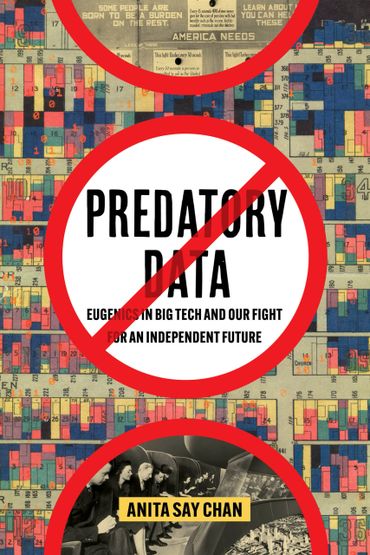
Chan, Anita Say. Predatory Data: Eugenics in Big Tech and Our Fight for an Independent Future (University of California Press, 2025).
Chan is an incredible information science and science and technology studies scholar and this is an amazing book. Before this book the connections of Silicon Valley to eugenics in individuals such as William Shockley was well known, but the longer history of eugenics and tech data connections to 19th century anti-immigration policies, intelligence quotients, and modern day Silicon Valley had not been put together as a coherent and continuous story power and racism in the United States. This book does just that, and does so brilliantly. It also provides a wondrous deep analytical foray into Chicago and Hull house, and feminist resistance. This sets up her chapter on "The Coalitional Lives of Data Pluralism: Intergenerational Feminist Resistance to Data Apartheid," which explores women's resistance in Mexico and Argentina. The richness of this book is putting the information technology and eugenics story together in a fuller way than had ever been achieved, along with inspiring analysis of women's and postcolonial resistances as blueprints for a social, political, and ethical tech otherwise.
DeNardis, Laura. The Internet in Everything: Freedom and Security in a World with No Off Switch (Yale University Press, 2020).
There is no stronger scholar of global internet governance than Professor and Dean Denardis (American University). This book is new book and has a different, yet complementary, focus on the Internet of Things IoT), the devices and connectivity that have changed our world. It is a triumphant achievement that truly stands out above all other books in this important space of IoT, policy, centralized power, surveillance, and our dwindling privacy. Very highly recommended.
Eubanks, Virginia. Automating Inequality: How High-Tech Tools Profile, Police, and Punish the Poor (Picador, St. Martins Press, 2018).
This is a wonderfully conceived, highly accessible, and path breaking book on class, race, and precarity in our digital world. As we are surveilled, profiled, and disempowered seemingly at every turn by giant corporations, government, and other organizations, this precarity exponentially and deleteriously impact the poor. It often is so disproportionate because it is self reinforcing within and between domains. It happens in education, access to quality healthcare, housing, jobs, policing, incarceration, and other realms. It also occurs because of systems like predictive policing of the past greatly impacting the future--more heavily policed areas because of past crime statistics mean the that more people are arrested and prosecuted in certain areas, with leads to more targeted policing, and often higher crime statistics in the future in an unending accelerating cycle. Its case chapters, especially the "High Tech Homelessness in the City of Angeles" and "The Allegheny Algorithm," on Los Angeles homelessness and the Pittsburgh region's Allegheny Family Screening Tool and its impacts are especially engaging, heart wrenching, and vital to read. The last conclusion, "Dismantling the Digital Poor House" is offer some paths to a better and more equal society.
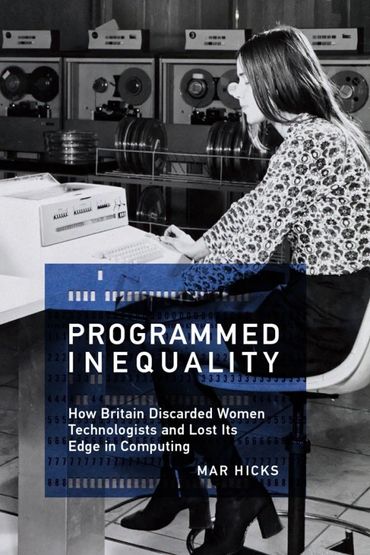
Hicks, Marie (Mar). Programmed Inequality: How Britain Discarded Women Technologists and Lost Its Edge in Computing (MIT Press, 2017).
A wonderfully conceived, written, and structured study on pervasive gender bias in Great Britain in the computer programming field and the consequences of this to the British Civil Service, and industry. This tremendous book stands alone as an unequalled monograph in gender and computing. It is one of the few books published in the history and sociology of information technology to win multiple prestigious book awards. If anything, it deserved even more, this book is tremendous. Highly recommended.
Lei, Ya-Wen. The Contentious Public Sphere: Law, Media, and Authoritarian Rule in China (Princeton University Press, 2017).
Harvard Sociologist Ya-Wen Lei published a true gem of book examining platforms, government policy, media, and users in China. It clearly shows how the Chinese Government's efforts at control inadvertently and in part planted the seeds of creative uses of digital technology and the emergence of an important and influential contentious public sphere. If you are interested in IT platforms, politics, and culture in China (and everyone should be or will be if they pick up this), I urge you to read this book. I find it quite simply unequaled in the sociology of the media, law, the internet and the cloud in China. It also is among the very best ever published on software studies and in making complex sociocultural contexts an incredible learning experience and true joy to read.
Peter Little. Toxic Town: IBM, Pollution, and Industrial Risks (NYU Press, 2014; 2017 Pap.).
This is a terrific book that examines the history and environmental, social, cultural, and health and ecological legacy of IBM's degradation and pollution on its famed company town of Endicott, New York. Engagingly written, this is one of the best books ever published on the environmental legacy of a major corporation on a company town, and it really stands alone in the information technology space of this genre. Too often the environmental side of IT companies are given a pass rather than focusing on them along with automobile, steel, and other heavy industries. Semiconductor manufacturing is greatly polluting, and other components, materials, and processes are as well. This book achieves much, in historical documentation and in also engagingly telling the story of the people of the local community, and the cultural understandings and responses to health risk.
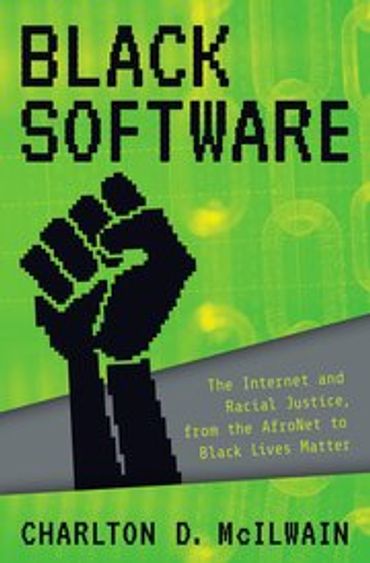
McIlwain, Charlton. Black Software: The Internet and Racial Justice from AfroNet to Black Lives Matter (Oxford University Press, 2019).
The relative dearth of scholarship on African American computing history scholarship received a great boost with this major study. NYU's Prof. and Vice Provost McIlwain draws on wide range of sources to produce a path breaking book. It achieves greatly and also reminds us of how much more focus there needs to be on producing historical and software studies monographs on African American computing and software and like this book, with a depth of sociocultural contexts.
Medina, Eden. Cybernetic Revolutionaries: Technology and Politics in Allende’s Chile (MIT Press 2011, 2014 Paperback).
Winner of multiple prizes including the first, and to date only, history of computing book to win the esteemed SHOT Edelstein Best Book in History of Technology. This book is quite simply unequaled in our field! The depth of research, quality writing, and astute analysis of cybernetics and politics in Allende's Chile yields a fascinating and important work of scholarship that contributes immensely to many literatures--social and political history of technology, Latin American studies, software studies, and technical understanding of cybernetic research, development, and application. Its depth with quality analysis of sociocultural contexts of IT in Latin America, and sociocultural contexts is unequaled. Very highly recommended!
Misa, Thomas J. Gender Codes: Why Women Are Leaving Computing (IEEE and Wiley, 2010).
This is a collection made up of revised papers of top scholars (T. Misa, J. Abbate, C. Schlombs, N. Ensmenger, T. Haigh, etc.), brought together for CBI's Gender Codes event, who revised and expanded their talks, along with a few other recruited chapters (M. Hicks and J. Yost), to make this an engaging and very important book. It offers papers on gender and computer science education, women programmers in the workforce, women entrepreneurs, and other topics and themes. Misa, one of the leading historians of technology in the world, skillfully pulls it all together to offer insights on why women in computing peaked percentagewise in the 1980s and dropped precipitously thereafter and only rebounded partially since. This is a terrific book on gender history, software studies, and the many sociocultural contexts of gender and IT in organizations. Highly recommended.
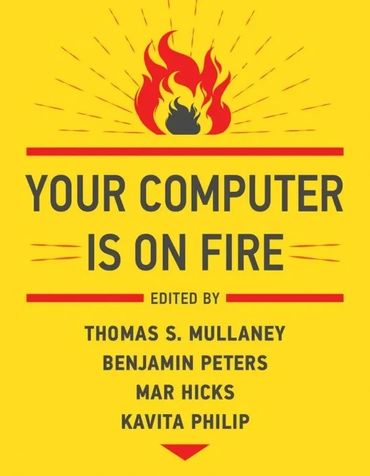
Mullaney, Thomas, Benjamin Peters, Mar Hicks, and Kavita Philips, eds. Your Computer Is On Fire (MIT Press, 2021).
From the attention-grabbing title and the works of the stellar thought-leader editors to the many excellent contributors, this book delivers strongly in its diversity and quality in examining a wide range of topics and themes on the social, cultural, and political history and sociology of computing.
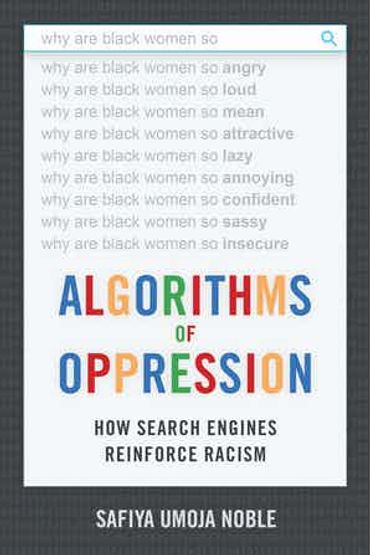
Noble, Safiya Umoja. Algorithms of Oppression: How Search Engines Reinforce Racism (New York University Press, 2018).
This book by esteemed African American Studies and Communication scholar and Co-founder and leader of the UCLA Center for Critical Internet Inquiry (and MacArthur Fellow) Safiya Noble is of unprecedented importance as a case in how information technology and its algorithms (Google's search engine) create and reinforce race and gender biases in our society. This is a must read for all in race, software studies, and the range and often hidden sociological contexts. It succeeds on all levels in its ambitious and vital undertakings. Highly recommended!
Yost, Jeffrey R. Making IT Work: A History of the Computer Services Industry (MIT Press, 2017).
A business and social history of the many segments of the computer services industry from programming services, consulting, and systems integration to time-sharing and the Cloud. It addresses gender and the labor of programming in multiple chapters as it examines discriminatory barriers to advancement of women professionals in the IT services industries. IT services is by far the largest portion of IT industries, greater than hardware (computers but not handsets) and software products combined, making it economically and socially all the more consequential as an industry and major segment of the economy. The book seeks to not only be the first major history of this industry, but also to understand it a way contributing to software studies and sociocultural contexts.
Yost, Jeffrey R. and Gerardo Con Diaz, eds. Just Code: Power, Inequality, and the Political Economy of IT (Johns Hopkins University Press, 2025).
This book grew out of a 2020 major CBI Symposium of the same title in October 2020. The stellar group of interdisciplinary chapter authors are made up of those revising work they presented at the event, while a third are equally gifted scholars Yost and Con Diaz recruited after the event to round out themes. Just Code has multiple meanings--merely code, thus underestimating its power, as well as Justice in code (software and algorithms) and codes of practice, culture, and law. The book has three parts and an chapter length appendix on the history of neural nets and AI authored by Yost and Con Diaz. The three parts are: PART I. HOW DOES CODE BECOME BOTH A SUBJECT AND A MEANS OF GOVERNANCE?; PART II. HOW DOES CODE BECOME INFUSED WITH SOCIAL VALUES, ASSUMPTIONS, AND BIASES?; PART III. WHAT DOES IT MEAN TO GRAPPLE WITH CODE? The themes focus on different aspects of social politics including race, class, gender, disability and intersections, as well as postcolonialism, antitrust, security, surveillance, and privacy. The chapter authors in order of appearance in the book: Ya-Wen Lei; Meg Leta Jones
Justin Petelka, Megan Finn, Janaki Srinivasan, Elisa Oreglia, and A. P. Janani; Hamid R. Ekbia; Shun-Ling Chen; Gerardo Con Díaz; Stephanie Dick; Elizabeth Petrick; Mariel García Llorens; Elizabeth Semler; Jeffrey R. Yost; Dylan Mulvin; Shreeharsh Kelkar; Mar Hicks; Jennifer Alexander; Gili Vidan; Héctor Beltrán.